
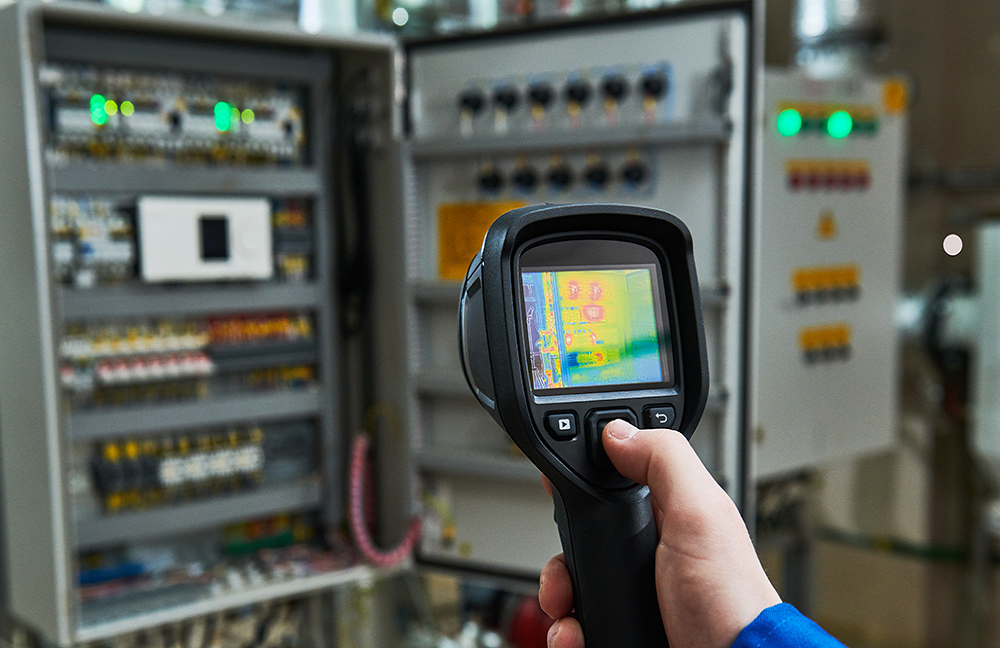
Professional Electrical Infrared Thermographic Surveys
Electrical thermography is a non-contact diagnostic technique used to identify faults, hotspots, loose terminations, phase imbalance, overloads, harmonic heating, and insulation breakdown in electrical distribution systems. All inspections are performed using certified FLIR thermal imagers under live-load conditions, providing accurate early detection before failure occurs.
Why Electrical Thermography Is Essential
Infrared scans reduce the risk of electrical fires, protect personnel, and satisfy insurer requirements for annual preventative maintenance. Many insurers — including Santam, Old Mutual Insure, Hollard, Bryte, and Mutual & Federal — require documented thermographic inspections for commercial and industrial sites.
- Early detection of electrical faults before failure
- Full compliance with SANS 10142-1 and ISO 18434-1
- Required by insurers for risk mitigation
- Reduces downtime, fire risk, and equipment damage
- Non-intrusive testing under normal operating load
Typical Defects Identified
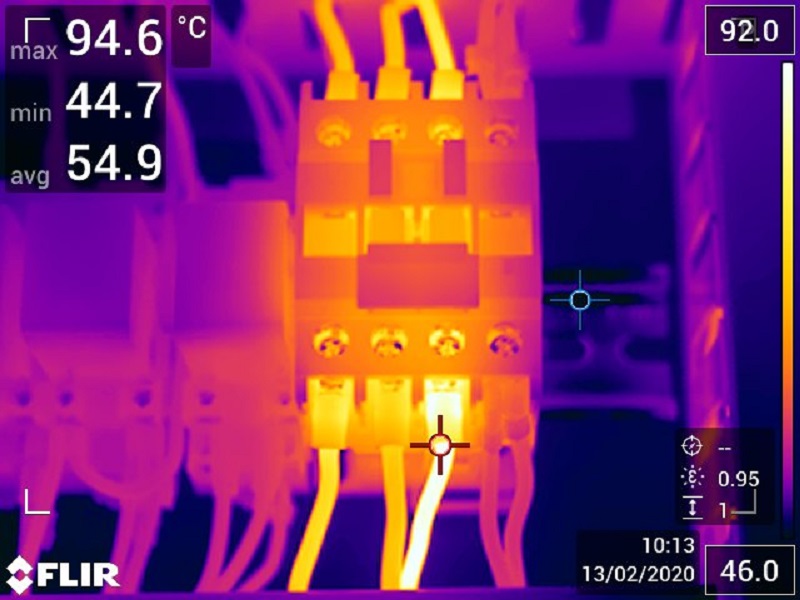
Thermography reveals thermal anomalies not visible to the naked eye. Common findings include:
- Loose or high-resistance terminations on busbars, lugs, and cable connections
- Overloaded circuits and phase imbalance
- Neutral/earth faults and circulating currents
- Incorrect cable sizing or termination methods
- Failing breakers, contactors, isolators, and busbars
- PFC (Power Factor Correction) capacitor failures
- Neutral conductor overload in unbalanced three-phase installations

Standards & Compliance
- SANS 10142-1 — Wiring of Premises: Operation & Maintenance
- ISO 18434-1 — Condition Monitoring: Thermography
- ISO 50001 — Energy Management (for energy-loss analysis)
- NETA MTS — Severity classifications P1–P4
Why Live-Load Inspection Matters
SANS 10142-1 and insurance underwriter requirements specify surveys be conducted at or above 40% of rated load. ΔT versus reference is the primary classification metric — not absolute temperature. Context, load, and phase asymmetry all inform the severity rating.
Survey Deliverables
Full Colour Report
Visible + thermal image pairs per finding with temperature measurements, ΔT calculations, and load readings.
P1–P4 Severity Rating
Each finding classified Critical / Serious / Moderate / Low with specific recommended corrective actions.
Insurance-Ready Format
Report structured for direct submission to Santam and other insurers. Accepted for underwriting compliance.
Distribution Boards & DBs
Loose terminations, overloaded neutrals, imbalanced phase loading, failing MCBs, and inadequate conductor sizing.
Main Switchgear & MCC Panels
Busbar overheating, corroded contacts, phase-to-phase asymmetry, failing contactors, and high-resistance bus joints.