
Why Insurers Are Paying Attention
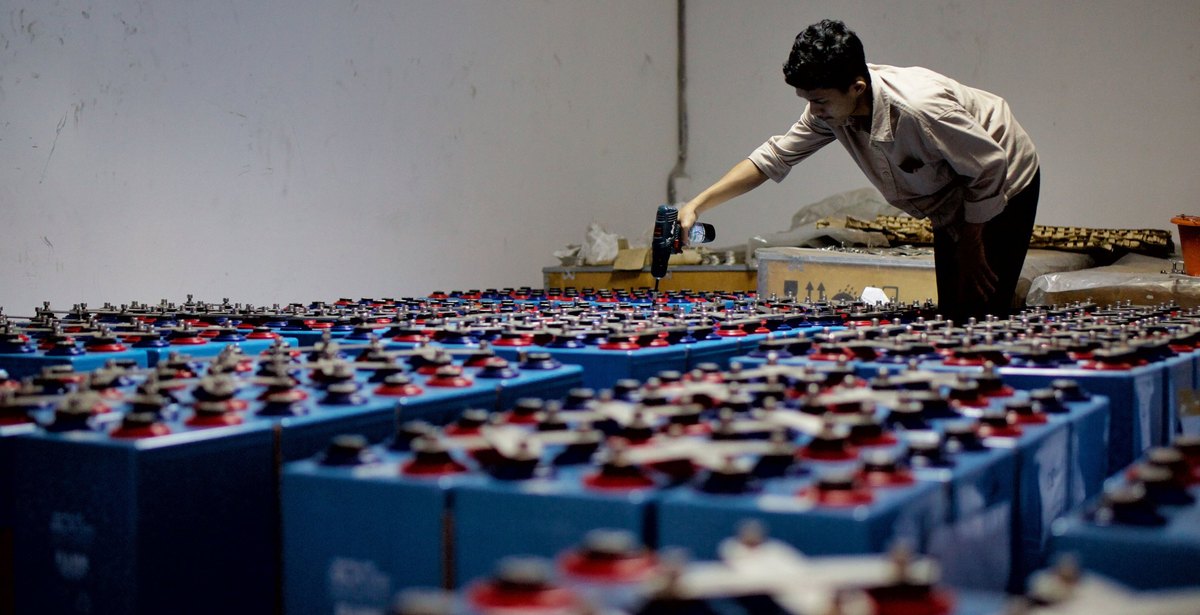
Data centres are being built and expanded quickly, and battery energy storage systems (BESS), most often lithium-ion, are being specified into many of them for power resilience. In February 2026, insurer Starr published guidance noting that most property and builders-risk policies for large data centre projects require documented planning around BESS risk before cover starts, and that a single failure in a densely packed facility can threaten the whole site.
A March 2026 Kennedys analysis in Insurance Day made the same point from the claims side: data centre fires are producing complex, high-value losses, with business interruption claims typically exceeding the physical damage. It listed electrical faults, HVAC failures and inadequate maintenance among the common ignition causes, and identified lithium-ion thermal runaway as a growing concern.
BI > PD
business interruption losses typically exceed physical damage in data centre fires (Kennedys, March 2026)
Records
maintenance records and detection logs support reasonable-care evidence after an incident (Starr, February 2026)
Independent
maintenance audits preferred over self-certification (Kennedys, March 2026)
The South African Context
The same drivers are present locally. Load-shedding pushed commercial and industrial sites towards solar and storage, and data centre operators are building renewable and battery capacity to protect supply. Lithium-ion battery fires were a headline topic at Firexpo 2026, held in Midrand in June and co-located for the first time with RE+ South Africa. Earlier this year, Discovery Insure and Fire Ops SA reported that roughly one in four structural fires Fire Force attended in Johannesburg were solar-related; our solar and battery storage article covers that data and its limits.
No single South African statute sets a comprehensive insurance regime for battery storage facilities. In practice insurers assess the battery chemistry, fire suppression, ventilation, spacing, monitoring systems and emergency-response arrangements, so the requirement you meet is the one written into your policy and any contractor or lender conditions.
What Thermographic Inspection Contributes
A periodic survey is a preventive layer on the electrical and thermal balance-of-system, not a substitute for the battery management system (BMS) or for engineered detection and suppression. Within that role it addresses faults that are a well-recognised ignition pathway at storage sites:
- DC and AC connections — busbar joints, cable lugs, fuse and contactor terminations, and isolators. Loose or oxidised connections carrying DC current under load are a classic resistive heating fault.
- Power conversion equipment — inverter and PCS terminals, heatsinks and cooling-path condition.
- Upstream and downstream distribution — the main and sub-distribution boards, UPS and PFC equipment feeding and fed by the storage system.
- HVAC and thermal management — a failing cooling path shows up as a thermal pattern change before it shows up as an alarm, particularly where enclosure temperature uniformity matters.
- Accessible external surfaces of racks and enclosures, assessed for uneven heating relative to comparable units under comparable load.
Findings should be judged by ΔT against similar components at similar load and against ambient, with the operating load and state of charge or discharge recorded at the time. Generic alarm temperatures taken from other equipment types are not a substitute for the manufacturer’s limits.
What a survey cannot do
A handheld survey sees external surface temperature at one point in time. It does not see inside sealed cells or modules, cannot detect cell degradation before it produces a surface signature, and cannot intercept a thermal runaway event that develops between visits. Early-warning against thermal runaway is the job of the BMS, gas and smoke detection, and, where fitted, continuous thermal monitoring. Manufacturers of fixed thermal cameras market continuous monitoring for exactly this reason. A periodic survey should be represented to clients and insurers as one layer in that stack and never as a replacement for the others.
Documentation Is Part of the Risk Control
Both the Starr and Kennedys commentary stress the same practical point: insurers and, after a loss, claims investigators look at what the operator can demonstrate. Dated maintenance records, detection system logs, independent inspection reports and evidence that findings were closed out all count. The Kennedys piece also notes that maintenance contractors and facility managers can become recovery targets where inadequate inspection allows known defects to persist, so a clear inspection record protects the service provider as well as the owner.
Practical Steps
- Bring BESS, PCS, associated distribution and HVAC into the scope of your annual electrical thermographic survey; for critical sites, discuss a shorter interval with your insurer.
- Treat the first survey as a baseline. Record load, state of charge, ambient and enclosure conditions so later surveys are comparable.
- Confirm connection torque checks are part of the maintenance plan and that thermography is used to verify them, not replace them.
- Keep the BMS alarm history, detection test records and thermographic reports together as one evidence file.
- Ask your insurer or broker what BESS-specific documentation your policy requires, rather than assuming the electrical survey covers it.
Add Battery Storage to Your Survey Scope
Enisave Solutions extends electrical thermographic surveys to battery storage, power conversion and associated distribution at commercial and data centre sites.
Request a Survey QuoteSources
- Starr — Battery Energy Storage Systems and Thermal Runaway Risks in Data Centers (20 February 2026)
- Kennedys — Data centre fires are increasing risk for insurers (Insurance Day, March 2026)
- Engineering News — Firexpo 2026 to spotlight compliant, practical solutions for a changing fire landscape
- FLIR — What Are the Inherent Risks of BESS Sites, and How Can Operators Overcome Them?